
News and Success Stories
Interview with Serdar Kaynar – There is a Great Potential for Development of Pomegranate Production in Valandovo
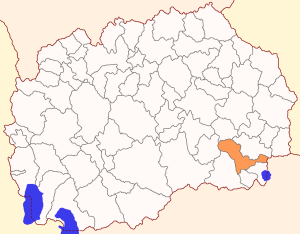 The region of Valandovo in North Macedonia stands out as a prime location for cultivating pomegranates, olives, and persimmons, thanks to its unique climate and fertile soil conditions. The region benefits from a plentiful water supply from nearby rivers and irrigation systems, ensuring consistent hydration for the crops. These natural advantages, combined with the expertise of local farmers, have made Valandovo a key area for pomegranate cultivation in North Macedonia. The pomegranates produced here are of exceptional quality, making them highly sought after in both domestic and international markets. Over the past decade, the region has also seen the establishment of numerous orchards dedicated to persimmons and olives.
The company ‘ABG Investment’ under the joint brand ‘KUVET’, embarked on a successful venture of acquiring and processing pomegranates in the region, leading to the production of exceptional quality pomegranate juices. With support from IME and utilizing private sector engagement, the company aims to develop a nursery of high-quality pomegranate seedlings, provide technical expertise and guidance to farmers, and facilitate organic certification of local farms. With this holistic approach in mind, as part of the capacity building efforts, the company was visited by the experienced agronomist Serdar Kaynar from Turkey. Mr. Kaynar is a respected pomegranate, olive, and citrus fruit production consultant with over thirty years of experience.
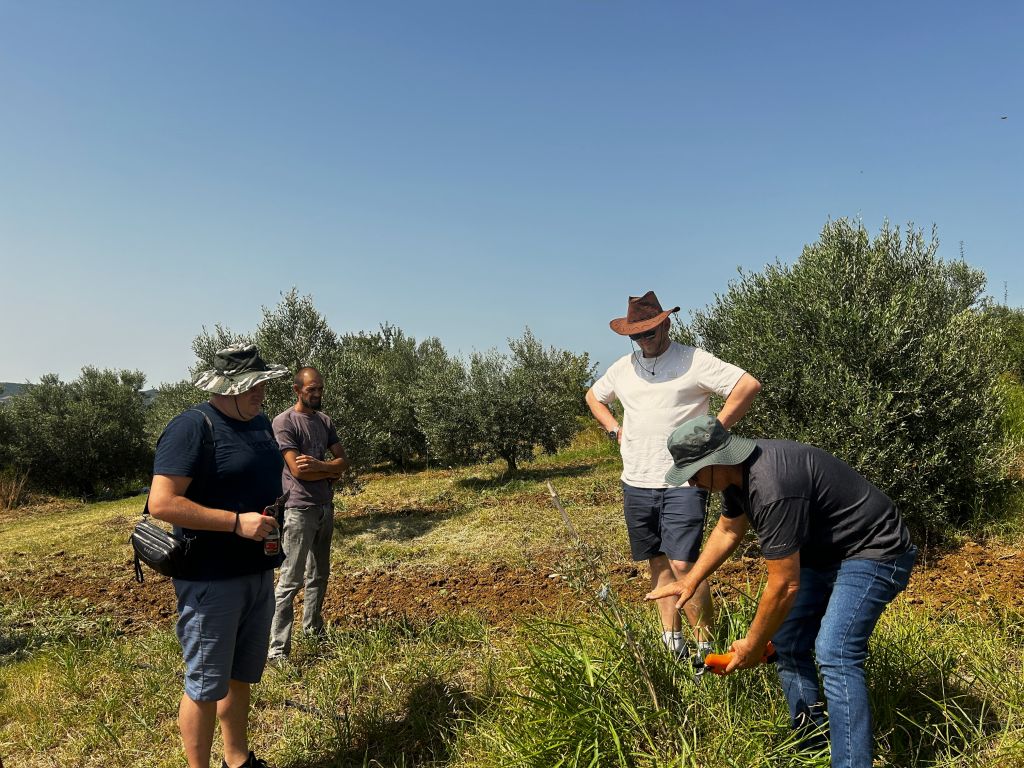
Mr. Kaynar first held a public educational training for many pomegranate producers in Valandovo in February this year and later in August conducted practical mentorship sessions with individual pomegranate producers in the orchards, accompanied by a responsible local agronomist. On one such occasion, we visited the pomegranate orchards and conducted a brief interview with Mr. Kaynar who explained the learning and development process of farmers. We also discussed the potential for growing pomegranates in North Macedonia, the existing opportunities and challenges.
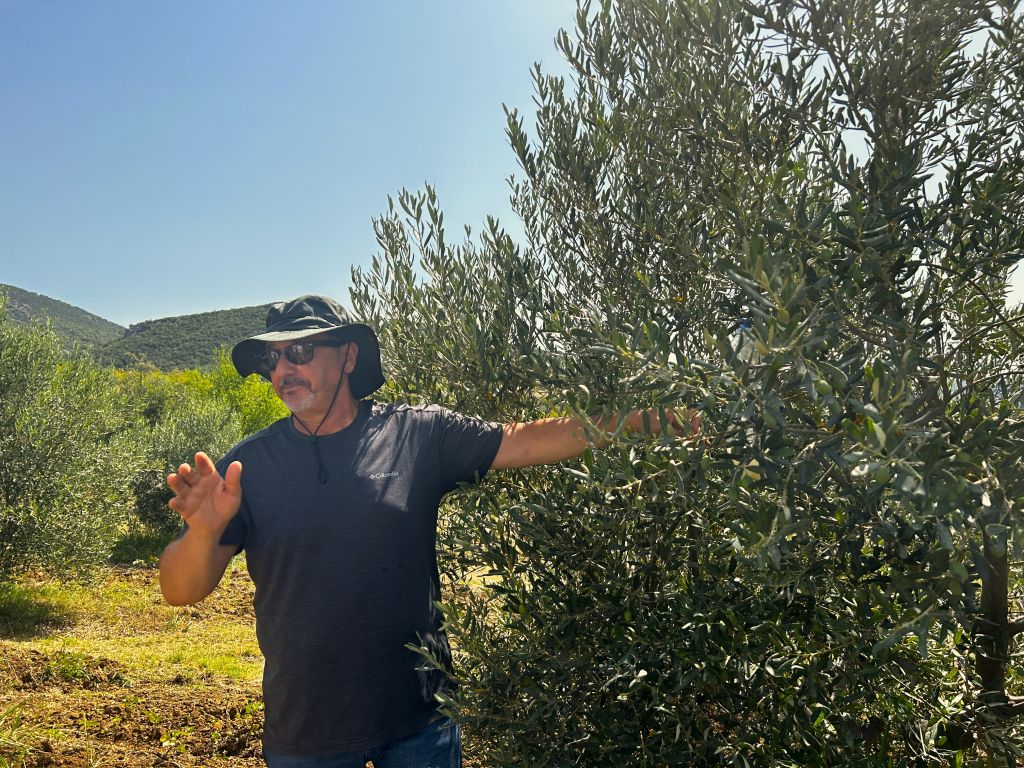
IME: What do you think about the local varieties of pomegranate in the Valandovo region? What is the potential for future development?
Kaynar: The local varieties of pomegranates that are grown in the country are more resistant to climate changes and have a wonderful taste, but they do not tolerate transportation and therefore do not have the possibility of being exported as fresh. On the other hand, new plantings of varieties like ‘Hedges’ or ‘Wonderful’, for which there is a demand and market in Europe and the world, have a greater sensitivity during cultivation. My advice was particularly aimed at the cultivation of this type of pomegranate. Overall, there is a great potential for the development of pomegranate production in North Macedonia. What is missing is an adequate irrigation system and the application of correct agrotechnical measures. Should that be addressed, there is a huge potential for success.
IME: You have already conducted one training for farmers this year in February. How willing are they to acquire and apply newly gained knowledge?
Kaynar: In agriculture, the processes require a lot of time, effort and patience. I must say that people here have the same mentality as in Turkey. The problems we face are the same. I can say that the farmers trust my teaching methods. People are open to learning new things and take advice easily. As for the crop itself, if the right cultivation method is applied, pomegranates can be an excellent export crop, given the proximity of North Macedonia to Europe.
IME: What were the main benefits for the farmers from the study visit in Adana, Turkey?
Kaynar: The study visit entailed an easier, hands-on transfer of knowledge between me and the farmers. We discussed the long-term benefits of proper pomegranate cultivation. I believe that a lot can be achieved by exchanging best practices with experienced farmers from Turkey. I must accentuate the fact that the presence of a local agronomist like Goran Baleski was very helpful because he had great understanding of the subject and managed to transfer my advice in the right and understandable manner to other farmers included in the process.
In conclusion, by leveraging the expertise of regional experts and farmers, the initiative aims to elevate production standards and promote environmental sustainability. This comprehensive approach will not only strengthen the supply chain but also increase the number of farmers cultivating pomegranates, persimmons, and olives. Additionally, it will boost the export of high-value products to both local and international markets, thereby generating additional income throughout the supply chain. The Swiss Increasing Market Employability Program (IME) plays a pivotal role in this endeavor by providing essential support for the modernization and improvement of pomegranate production and processing in the Gevgelija-Valandovo region of North Macedonia.


