

Towards Sustainable Agribusiness: Innovative Approaches to Environmental Sustainability
The growing concern for environmental sustainability in agriculture has sparked significant interest in how agribusinesses can contribute to ecological preservation while still meeting the demands of a global market. The Swiss Increasing Market Employability Program (IME), implemented by the Palladium Group, is empowering agricultural producers and processors to adopt high standards of environmental responsibility. By fostering strategic partnerships with both organic and conventional agricultural producers, as well as wine producers, IME encourages responsible production models that balance environmental and economic priorities. The overarching goal is to support these businesses in supplying high-quality products to new markets while creating decent jobs that are essential to the livelihoods of many local communities. The following examples highlight the ways in which IME partners are contributing to a more sustainable agribusiness sector, demonstrating the impact of the environmental initiatives.
Private Sector Companies and Cooperatives Adopting Green Practices
Agrar Ko Company, a family-run business with over thirty years of experience in processing vegetables, uses reusable plastic buckets for harvesting peppers, replacing single-use plastic bags. This innovation significantly reduces plastic waste and promotes a more sustainable approach to harvesting. Additionally, the company uses glass packaging for its final products.
Zaum Organic, a leading producer of organic hazelnuts in North Macedonia and Europe, holds EU Organic and Bio Suisse certifications. By adhering to these rigorous standards, Zaum Organic fosters environmentally friendly cultivation methods that prioritize soil health, biodiversity, and minimal pesticide use. On the other hand, their Eko Leshnik Association enables as many farmers as possible to start producing hazelnuts as suppliers for the Swiss supermarket chain Coop, improving their skills and knowledge for production according to the required standards.
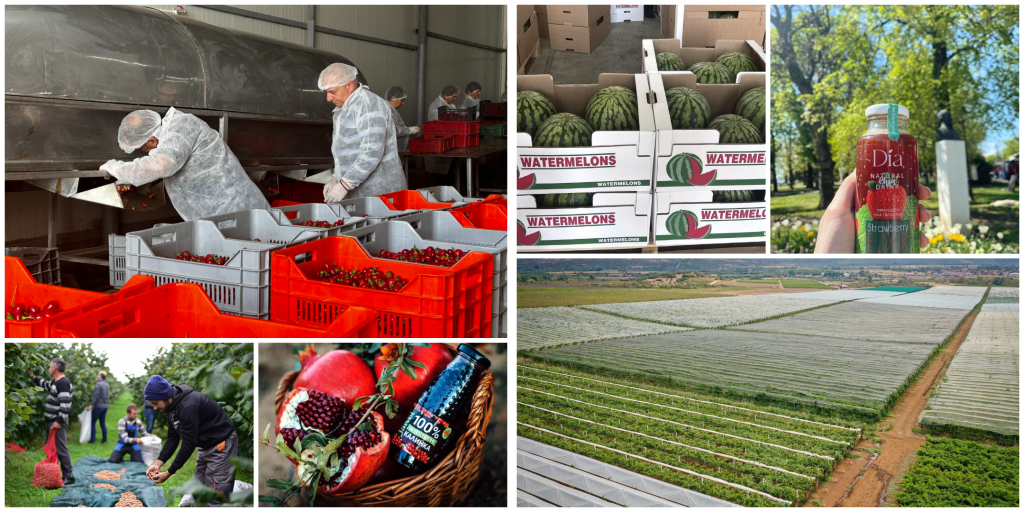
ABG Investment, operating under the brand KUVET, specializes in high-quality Macedonian ecological products such as pomegranate juice, raw honey, and organic olives. The company sources its produce from local partners with controlled geographical origins and holds organic certification. It also works on reducing pesticide use and adopting sustainable packaging, including reusable plastic crates for pomegranate harvesting.
Fresh Line, a leading four-party logistics company in the Balkans, upholds responsible farming practices by complying with Global GAP and GRASP standards. These certifications emphasize food safety, environmental sustainability, biodiversity, and worker welfare. Fresh Line also uses reusable crates for persimmons and watermelon harvesting.
Vittoria Fruit, one of the country’s largest grape producers, exemplifies the integration of digital solutions with its adoption of automated irrigation systems. These systems optimize water and fertilizer use through precision fertigation and plant protection techniques, minimizing resource consumption. In this way, Vittoria Fruit enhances crop yields while conserving water and reducing pesticide usage.
Kinado, the company behind the Chia Dia brand, specializes in healthy beverages. Their approach to organic production and streamlined manufacturing processes has increased efficiency. By focusing on sustainability, Kinado is meeting the rising consumer demand for eco-friendly products.
Seed of Life, a small healthy food business based in Negotino, has eliminated plastic packaging in favor of compostable materials. This shift also aligns with European initiatives to promote circular economies. The company is also planning to expand into the US market, aiming to bring its sustainable practices and healthy products to a broader audience.
Food Bar has integrated international food safety standards (IFS) and adopted packaging techniques using inert gas to extend the shelf life of fresh-cut vegetables.
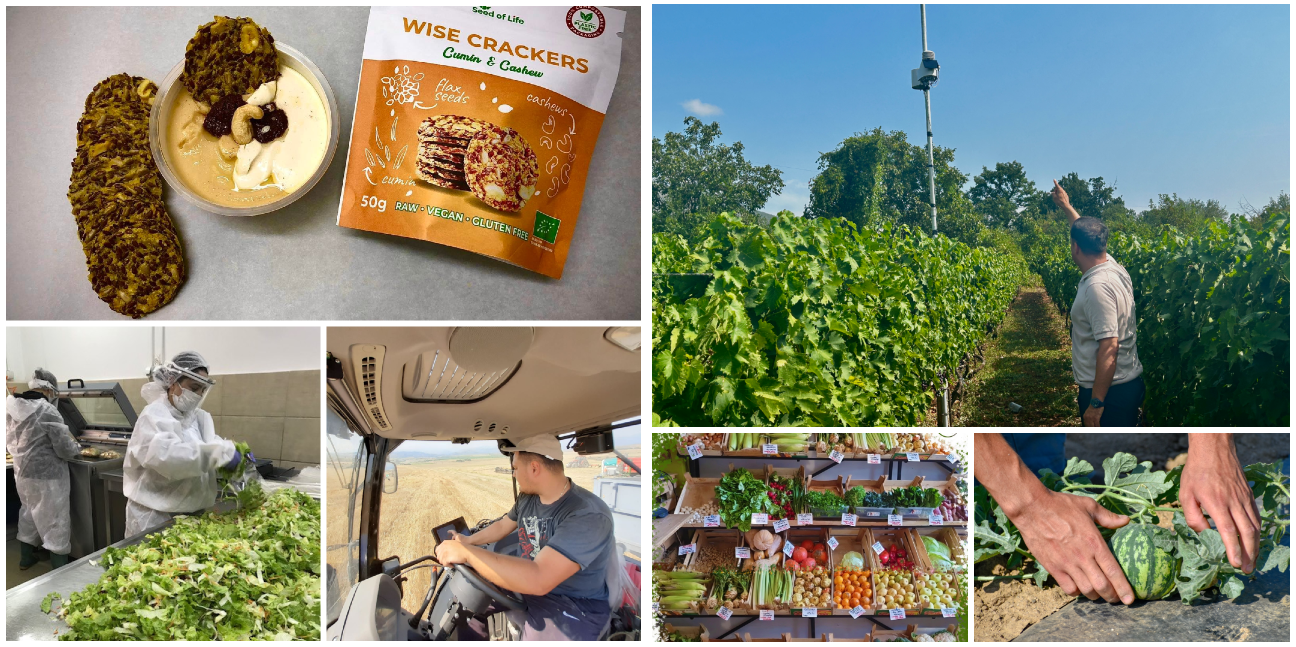
Similarly, Baja Sim, a small agribusiness, has adopted precision agriculture techniques to optimize the use of resources such as fuel, pesticides, and fertilizers. This innovative approach has resulted in increased crop yields and greater operational efficiency. By integrating GPS technology, the company can conduct more accurate field operations, leading to measurable reductions in fuel consumption and input usage. These advancements not only lower production costs but also contribute to more sustainable farming practices.
When it comes to the cooperatives, Kooperativa Agro-energjetike is pioneering sustainable agriculture by equipping farmers with specialized training and cutting-edge technology. In collaboration with the Agricultural Institute in Skopje, it has introduced hydrometeorological stations and a mobile app that provide real-time guidance on reducing pesticide use while optimizing yields.
Similarly, Good Earth, the region’s first organic consumer cooperative, supports local farmers in transitioning to organic production through training and guidance. Dedicated to fostering sustainable farming, Good Earth empowers local farmers through training and support, facilitating their transition to organic production methods.
Continuously Creating an Enabling Environment for Agribusinesses
The success of IME’s partners in the sustainable agribusiness sector highlights the importance of cooperation among producers, processors, certifying bodies, public institutions and educational organizations. By ensuring that even small-scale producers meet high sustainability standards, the agribusiness sector’s global competitiveness is being strengthened, while promoting responsible farming practices.
In addition to financial and technical support, the program also works on favorable legal framework for sustainable agriculture. It has contributed to the development of a new Law on Organic Agriculture, aligned with EU legislation, and a National Input List for Organic Production, setting clear standards for organic farming inputs. Beyond regulatory efforts, IME is fostering the next generation of agricultural leaders through rural youth clubs and the new study program for Digital Agriculture at the Faculty of Agricultural Sciences and Food in Skopje.
By integrating environmentally sustainable practices, promoting technological innovation, and fostering responsible consumption, the program is not only transforming the agribusiness sector but also contributing to broader environmental sustainability goals. Through the collective efforts of its partners, it demonstrates that small, targeted actions can lead to significant environmental and economic benefits, creating a ripple effect from rural communities to global markets.